Sunday, May 19, 2019

5 Easter


The Baptism of Brooks Broten

May 19, 2019


Revelation 21.10, 22-22; John 13.31-35

+ If you’re anything like me, if you have been active in the Church over the years, you no doubt have encountered other Christians who tell us things like this:

“You know we’re in the last times, right?”

Or,

“When the Rapture comes, you want go with it, because to be left behind is terrible.”

There were even references recently to Revelation and the end times when the United States moved its embassy in Israel from Tel Aviv to Jerusalem (a reference I didn’t understand no matter how hard to tried to unravel it)

I personally never understood these comments until I later heard that they come from some Evangelical churches that have found these interpretations of the Book of Revelation to mean that what is written in that book is happening right now.

And with the popularity of such books as the Left Behind series (which I personally find to be major manipulations of scripture, not to mention very badly written books), we have seen even more clearly some Christian’s ideas of how the Book Revelation somehow is interpreted in the light of current events  current events.

Later, as I sort of studied it a bit, I found a big problem with such teaching:

Almost every Christians since the time of Jesus believed they were in the “end times.”

The problem with this is that the rallying cry of these being the “end times” it’s been said of every major era of modern history.

People thought it was the end times when the Black Death rolled through Europe.

People thought it was the End Times when the Protestant Reformation raged, or when the Turks invaded Europe or when the French Revolution happened.

People thought it was the end times when World War I came.

People thought it was the End Times during the 1918 Flu Epidemic.

People definitely thought it was the end times when Hitler rose to power.

People in the 1950s were saying it was the end times with the Communist threat from Russia and China.

Or they were saying it was the end of times when kids started listening to Rock and Roll or the Beatles came to the U.S, or anytime during the very tumultuous 1960s.

And I remember my aunt, who belonged to the First Assembly of God Church, saying it was the end times in the 1980s.

I remember her saying that we should not have VISA cards because VISA was a clever guise for the Mark of the Beast—the numbers 666.

If we were to believe everyone who cried it was the end times, we could honestly say that the end times have been happening for at least 2,000 years. 

I solved my confusion about this issue by doing the only thing I could do in the fact of all that confusion:

I simply re-reading the Book of Revelation from beginning to end.

And you know what happened?

I was able to claim—or re-claim—it, and helped me to read it anew.

And I was able to see that the Book of Revelation really isn’t about “End Times”

Still, I think there are a lot of us who feel very differently about the Book of Revelation.

Revelation is a strange book.

It can be a frightening book.

But—and I know this might seem strange to many Christians— I don’t see it as a book of prophecy, as many Christians do.

I don’t see it saying anything definitely about future governments or some messianic Anti-Christ in our midst or that we are living in the so-called “last days” or what have you.

Mind you, I do believe “anti-Christs” come and go through history.

I do believe that powerful people who represent every anti-Jesus, anti-Christian ideals of loving God and loving others and respecting the worth of dignity of all peoples are real, and those people are, by definition anti Christ.

But, for that matter, anytime any of us run counter to these Christian ideals, we too become kind of “anti-Christs” to those around us.

Still, what I do see it doing is speaking to us through some beautiful and powerful poetry on what is happening in our lives, right now, as Christians, and about how, in the end, Christ is victorious.  

I think it is important for us to re-claim Revelation in this way —and, in doing so, re-read it with a new lens. 

In our reading this morning from Revelation, we find some very strange esoteric images—not an uncommon thing when we read Revelation.

We find this morning these images of a new heaven and a new earth, of this new Jerusalem, where death is no more or tears or crying.

It is a place of beauty and glory.  

It is a place of unending life.

And it is here that I think the Book of Revelation speaks loudly to us.

Even we, as Christians, sometimes struggle with the reality of death in our lives.

Even we fear it at times.

And that is all right.

That is normal.

Of course, death is a part of life, and certainly it’s part of my job as a priest.

I knew that going into it.  

But, let me tell you: it still is hard, often.  

And for people who have to deal with this mystery of death on a regular basis, there have to be ways to find strength and comfort in the midst of death.  

One of the ways I find my way through this sometimes constant dealing with death is by turning to the scriptures.

There is a common theme we find through all Scripture.

And that common theme is this:

the defeat of death.  

Or as the great Episcopal theologian William Stringfellow called it: “authority over death.”

I agree with him 100%.  

I think he is absolutely right about that.

Stringfellow saw it most profoundly in the life of Jesus.  

There we see this authority over death most profoundly.

We see it every time Jesus healed the sick, calmed the storms, cast out demons, ate with sinners, cleansed the temple, raised the death, carried the Cross.

And of course, in the Resurrection, which we are still celebrating in this season of Easter, it is all about authority over death.

In all of this, we see the God of life—God in Jesus—being victorious over death.

This view of life over death speaks to us most profoundly during this Easter season.

During this  season, what we have found most vital to our understanding of living into this Easter faith is the startling fact that death truly does not have power over us.

We, as Christians, cannot let the power of death control and direct our lives.  

As Christians, as followers of Jesus who crossed that awful boundary between life and death, and came back, we must truly be defiant to death.  

Of course, that ultimate victory over death happens only when we can face death honestly.

True victory over death is when we can see death in the light we hear about in today’s reading from Revelation.

Only then do we realize that death has no victory over us.

Because of what happened on Easter, because of the Resurrection, because Jesus did die, yes, but God raised him that tomb, and because Jesus walked victorious upon the chains of death, we know now death does not have the last word in our lives.

 Over this last year and a half especially, I can tell you, it would’ve been easy for me to just give into this victory death strives for over life.

Mourning does that do us.

It weakens us and saps our energies from us.

We all get stuck in mourning patterns.  

But, for us Christians, we can’t be stuck in such death.

We must live.

And we must move forward.  

We must  stand up against death.

I can tell you that, right now, in my own life, I am very tired of death.

I am weary of dealing directly with it.

I am tired of dealing with its after-effects.

I am tired of dealing with its seemingly overpowering presence.

But, standing up to death, even when we’re sick of it, is not easy.

Choosing life, with all its uncertainties, can be scary.

Even when moving forward into life  and living our lives fully and completely, we realize it can be frightening.

We are, after all, heading into the future which is unknown to us.

But that, again, is what I love about Revelation.

What Revelation promises to us, through all that poetry and imagery, is that death will lose, hatred will lose, violence will lose, evil will lose, war will lose—and goodness, and holiness and LIFE will be victorious.  

That isn’t wishful thinking.  That’s isn’t being naïve.

Rather, this is what it means to be a Christian.  

This is what it means to believe in the God of life.

That is what I means to follow Jesus.

Yes, following Jesus means following him to the Cross and to that dark tomb.  

And to death, yes.

But it also means following him into the great unknown on the other side of the Cross and the tomb—into that glorious, light-filled, unending life that swallows up death and darkness and war once and for all.

It means following him to the point in which the God of unending life raises him—and us—into unending life as well.

"See, the home of God is among mortals,” St. John tells us in our reading for today.
“He will dwell with them as their God;
they will be his peoples,
and God himself will be with them;
he will wipe every tear from their eyes.
Death will be no more;
mourning and crying and pain will be no more,
for the first things have passed away."


Those are words of absolute and glorious victory.

But more so, they are words of life—of a life that goes on forever and ever.

As we travel through these last days of Easter, as we head into this week in which we celebrate Jesus’ ascension to that place of life and light, into that place in which the God of life and light dwells, let us do so with true Easter joy.

Let us do so rejoicing from the very core of our bodies.

We are alive.  

This morning, we are alive.

Life is in us.

We are followers of Jesus.

We are filled with life and love.

As we heard Jesus say in our Gospel reading for today, “I give you a new commandment, that you love one another. Just as I have loved you, you should love one another. By this everyone will know that you are my disciple, if you have love for one another.”

Those words are our words this morning as well.

We are filled with love and life.

We are celebrating love and life.

We are celebrating life and renewed life in the baptism of Brooks.

When we renew our Baptismal promises, we are celebrating the unending life that is ours through baptism.

And it is all very, very good.  

We have much to be thankful for and in which to rejoice.

So, let us be thankful for this life.

Let us rejoice in it.  

And let us realize that in rejoicing in our lives and in the life within each of us, God has truly prepared for us, as we heard in our collect this morning, “such good things as surpass our understanding.”

Amen.


Monday, May 13, 2019

4 Easter


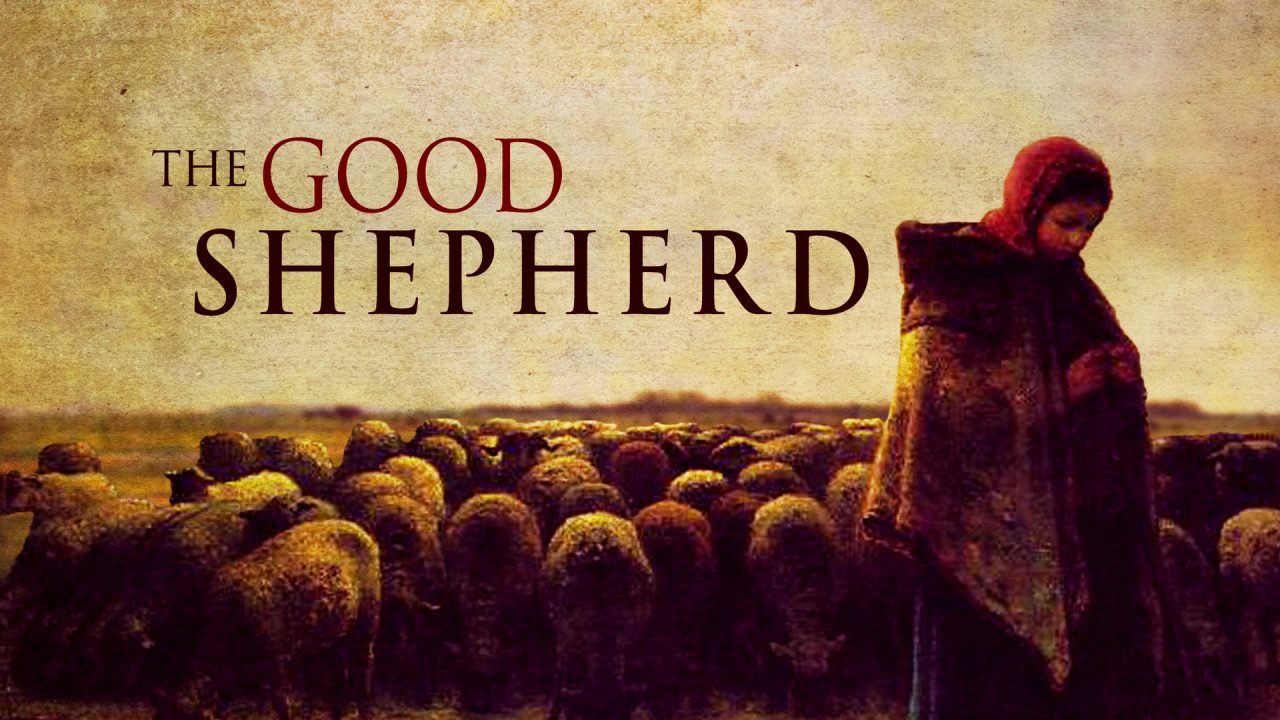
Good Shepherd Sunday

The Baptism of Saylor Mauk

May 12, 2019

Psalm 23; John 10.22-30


+ Today is a special day. It’s special of course because we are celebrating the baptism of sweet Saylor of course.

And it’s doubly special because it is also Good Shepherd Sunday. It’s Good Shepherd Sunday because of this wonderful reading we have in our Gospel reading for today, as well as our reading from Revelation, and, of course, the very familiar 23rd Psalm

But, every year we celebrate Good Shepherd Sunday without really thinking about it. How many times in our lives have we heard this psalm or the story or references to the Good Shepherd? For the most part, we just don’t even really think about it. After all, shepherds are just not a part of our modern lives.

Are there even shepherd anymore?  I’ve never met one. Have you ever met one?

Yes, still, when we really think about this image—of God being our shepherd—it still, weirdly, resonates for us.

We kind of get it.  And we are comforted by it. And it still does have meaning for us.

God as Good Shepherd. It’s a great image for God. In it, we encounter the compassion of our God.  

Certainly, for the people of Jesus’ day, this image of the Good Shepherd is probably one of the most perfect images Jesus could have used. They would have understood what a good shepherd was and what a bad shepherd was.

The good shepherd was the shepherd who actually cared for his flock.  He or she looked out for them, he watched after them.  The Good Shepherd guided the flock and led the flock.   He or she led the flock to a place to eat.

It’s a wonderful way to try to describe God’s goodness to us.  This image implies that God really—legitimately—cares for us and loves us.

This is an important aspect of the role of the Good Shepherd.  The Good Shepherd didn’t feed the flock.  Rather the good shepherd led the flock to the choicest green pastures and helped them to feed themselves.  In this way, the Good Shepherd is more than just a coddling shepherd.  He or she is not the co-dependent shepherd.  The Good Shepherd doesn’t take each sheep individually, pick them up, and hand-feed each one of them.  Rather, the Good Shepherd guides and leads the sheep to green pastures and allows them to feed themselves.  The Good Shepherd also protects the flock against the many dangers out there. He or she protects the flock from the wolves, from getting too near cliffs, or holes, or falling into rivers or lakes.
She or he cares for the flock.

And that’s VERY important.

Let’s face it, there are many dangers out there.  There are many opportunities for us to trip ourselves, to get lost, to get hurt. If we follow the Good Shepherd, if we allow ourselves to be led by him, we realize that those pitfalls are difficult, yes, but they don’t defeat us.  

Of course, the journey isn’t an easy one.  We can still get hurt along the way.  Bad things can still happen to us.  There are predators out there, waiting to hurt us.  There are storms brewing in our lives, waiting to rain down upon us.

But, with our eyes on the Shepherd, we know that the bad things that happen to us will not destroy us, because the Shepherd is there, close by, watching out for us—caring for us.  We know that in those bad times—those times of darkness when predators close in, when storms rage—he will rescue us.

This is what we are looking for in our lives—a savior, a protector.  We are all longing for someone who will comes to us and rescue us from all the bad things of this life.  And not just Superman who sweeps down from the skies and pulls us out of danger, and then just nods to us and flies away. We long to have this protector, this defender know us and genuinely care for us.

That’s what makes the Good Shepherd so special. The Good Shepherd knows his flock.

“I know them and they follow me,” Jesus says in today’s Gospel reading.

If one is lost, he knows it is lost and will not rest until it is brought back into the fold.  This is the kind of relationship we have with our Good Shepherd.  We are know God because God knows us.  God knows us and calls us each by our name. And loves us for just who we are—no matter who we are.

The Good Shepherd reminds us that we don’t have some vague, distant God.  We don’t have a God who lets us fend for ourselves.  We instead have a God who leads us and guides us, a God who knows us each by name, a God who despairs over the loss of even one of us.

We have a God who knows us and loves and cares for us.   All these are important images, vital images to explain the relationship God has with us and we with God.

I just came across this great quote from Chad Bird


We have a God whose goodness and mercy chases us and seeks us out. A God whose goodness and mercy follows us wherever we go and whatever we do.

But the Good Shepherd doesn’t end there.  This isn’t just about me as an individual and God.  

The image of the Good Shepherd must be taken and applied by anyone.  Any of us who follow Jesus are called to be good  shepherds in turn. We must love and love fully those who around us.  We must care for those people who walk this path with us.  We must look out for our loved ones and even our enemies, we must respect the worth and dignity of all people, and we must shepherd them in whatever ways we can in our own lives.

Again, this is not easy, especially when it seems we are lost at times, when we are falling into the traps life sets before us, when our alleluias during this Easter season feels cold and lonely.   

But, that’s the way God works, sometimes.  Sometimes, God’s works through our brokenness and helps us to guide others in their brokenness.   Sometimes the best Good Shepherd is the one who has known fully what a lost sheep feels like, who knows the coldness and loneliness of being that lost sheep.

So, on this day in which we celebrate the Shepherd who leads and guides, whose goodness and mercy chases us, let us not only be led, but let us also lead.    On this day that we look to the Shepherd who guides, let us be guided and let us guide others.  And let our alleluia on this Good Shepherd Sunday, even if it is a cold and lonely Alleluia, still be an Alleluia nonetheless.  Let it be the sound we make, even in the cold and lonely places we sometimes find ourselves in.   And let us, in that place, know that, even there, we are still experiencing the amazing glory and all-encompassing love of God.

Amen.


Sunday, May 5, 2019

3 Easter


May 5, 2019

John 21: 1-19

+ When I was in graduate school, studying poetry, I came across a great quote from the British literary critic, A. Alvarez.

He said, essentially, it’s good to be an apprentice. You learn the task—in this case, of poetry—so that “when the Devil takes you by the throat and shakes you,” it is then, that you’ll know what to do. It is then, that you become a poet.

It has been great advice. And I think it’s advice that can be used in multiple situations.

So, the question for all of you this morning is: When the Devil takes YOU by the throat and shakes you, what do you do?

What do you do when you find yourself at the left hand of God, a phrase that comes from Richard Rohr about being in a bad place in your life?

What do you do when the bad things of this life are thrown at you?

Do you shut down, and curl up and just wait for it to pass?

Do you freeze up and just brace yourself for it?

Do you react and rage at the injustice of it?

Or do you confront it all?

When the “Devil” takes me by the throat, when I find myself at the left hand of God (and I’ve been there MANY times in my life!) do you know what I do? I make myself busy. When I was diagnosed with cancer, when my father died very suddenly, when any of the bad things happen, I just get busy.

I do something.

Anything.

Because not doing something is worse than the Devil’s cold hand on my throat.

However, I will say this: when my mother died, I shut down to a large extent. I did not do something simply because I couldn’t do anything.  The shock of her death and the deep level of emotional pain prevented me from doing something. And that, to me, was so much worse.

Doing something in the face of the Devil—doing something when you find yourself on the left hand of God—is so much more imporatnt than freezing up and collapsing.

In this morning’s Gospel, we find the Apostles doing something very much like that.  They aren’t sitting around doing nothing.  They are doing some thing. They are keeping busy.

In the wake of the murder of Jesus, in the wake of his resurrection, in the wake of his appearing to them—in the wake of this unusual, extraordinary activity in their lives—they do the most ordinary thing in their lives.  

They go fishing.

They pick up their nets and they go out onto the water.

No doubt, considering all that had happened to them in the previous days and weeks, their minds were reeling.   But, now, they are doing something they knew how to do. Something that gave them some comfort, no doubt.   

Fishing is what they did, after all.  Fishing is what their fathers did and no doubt what their grandfathers and great-grandfathers did as well.  Fishing was in their blood.  It was all they knew—until Jesus came into their lives.   And, no doubt, when the extraordinary events of Jesus’ murder and resurrection happened, the only way they could find some normalcy in their life was by going fishing.

The fact is, this is probably the last time they would ever go fishing together.  Their old life had once and for all passed away with the voice that calls to them from the shore.   Their jobs as fishermen would change with the words “Feed my sheep.” In that instant, they would go from fishermen to shepherds.

No longer would they be fishing for actual fish.  Now they would be the feeding the sheep of Jesus’ flock.

That symbolic number of 153 seems to convey to us that the world now has become their lake. And what is particularly poignant about all of this is Jesus doesn’t come into their lives to change them into something else.  He comes into their lives and speaks to them in language they understand.

Jesus could have said to them: “Go out and preach and convert.”  But to fishermen and shepherds, that means little or nothing.   They are fishermen, not rabbis or priests.  They are not theologians.

Instead, Jesus says, “Feed my sheep.”  This they would understand.  In those simple words, they would have got it.  

And when he says “feed my sheep,” “Shepherd my sheep,” it was not just a matter of catching and eating.  It was a matter of catching and nurturing.

And this calling isn’t just for those men back then.  That voice from the shore is calling us too.  In a sense, we are called by Jesus as well to be shepherds like Peter and the fellow apostles.   And those around us—those who share this world with us—are the ones Jesus is telling us to feed.

It isn’t enough that we come here to church on a Sunday morning to be fed.  A lot of us think that’s what church is about. It’s about me being fed. It’s about me being nurtured. To some extent, yes.

But, if all we do is come to church to be fed and then not to turn around and feed others, we are really missing the point.  We, in turn, must go out and feed.  And this command of Jesus is important.

Jesus asks it of Peter three times—one time for each time Peter denied him only a few weeks before.   Those words of Jesus to Peter are also words to us as well.

In the wake of the devastating things that happen in our lives, the voice of Jesus is a calm center.  Amid the chaos of the world, the calm, cool voice of Jesus is still saying to us, as we cope in our ordinary ways, “feed my sheep.”  Because, it is in these strange and difficult times that people need to be fed and nourished.   Not just by me, the priest, only. But by all of us—all of who call ourselves followers of Jesus.  It is in times like these that we need to be fed, and it is in times like these that we need to feed others as well.

That, in a sense, is what it means to be a Christian. Following Jesus, as we all know, is not easy.   The fact is: it’s probably the hardest thing one can do.   Jesus is not present to us as he was present to those fishermen in this morning’s Gospel.  He is not cooking us a breakfast when we come back from ordinary work.  

This God of Jesus, this God he keeps telling us to love and to serve, is sometimes a hard God to love and serve.  Loving a God who is not visible—who is not standing before us, in flesh and blood, is not easy.  

And I’m sure I don’t have to tell anyone here this morning: loving our neighbors—those people who share our world with us—as ourselves, is not easy by any means. It takes constant work to love.  It takes constant discipline to love as Jesus loved. It takes constant work to love ourselves—and most of us don’t love ourselves—and it takes constant work to love others.

But look at the benefits.   Look at what our world would be like if we loved God, if we loved ourselves and loved others as ourselves.   It was be ideal.   It would truly be the Kingdom of God, here on earth.   It would be exactly what Jesus told us it would be like.

But to do this—to bring this about—to love God, to love ourselves, to love each other, it’s all very hard work.

Some would say it’s impossible work.   There are people, I’ll confess, I don’t want to love. I don’t want to love those people who hurt me, or who hurt people I actually do love.  Sometimes I can’t love them. I’m not saying I hate them. I’m just saying that sometimes I feel nothing for a person who has wronged me or one of my loved ones.  In that instant, it really is hard to be a follower of Jesus.

Certainly, it seems overwhelming at times.   Let’s face it, to live as Jesus expects us to live, to serve as Jesus calls us to serve, to love as Jesus loves—it would just be so much easier to not do any of it.    Being a Christian means living one’s life fully and completely as a follower of Jesus.  It means being a reflection of God’s love and goodness in the world.

 A quote you’ve heard me share many, many time is this one of  St. Augustine: “Being a Christian means being an Alleluia from head to toe.”

It means being an Alleluia even when the bad things in life happen.  It means being an Alleluia—in our service to others—when we would rather go fishing.  It means, occasionally, going and feeding the sheep rather than going off fishing and being a busybody when the bad things in life happen. 

In the midst of all the things in the world that confuse us—as we struggle to make sense of the world—the voice of Jesus is calling to us and is telling us to “feed my sheep.” Because in feeding those sheep, you know what happens: we too are fed.  In nurturing Christ’s sheep, we too are nurtured.

See, it all does work out. But we have to work at it for it to work out.

So, let us do just that. Let us feed those Jesus calls us to feed. And let us look for the Alleluia of our lives in that service to others.  In finding the Alleluia amidst the darkness, we—in our bodies and in our souls—become—from our head to our toes—an Alleluia.


Sunday, April 21, 2019

Easter


April 21, 2019


+ It’s really not much of a secret.

I LOVE Easter.

This, to me, is what it’s all about.

If anybody asks me, so what do you love most about being a Christian, I always say, Easter.

What isn’t there to love?

This is what it’s all about.

That holy moment—that moment when everything changed—when God raised Jesus from the tomb was the essential moment.  

The Jesus who appears to us on this Easter morning is not a ghost.

He is not a figment of our imagination.

He is not an illusion.

And this story isn’t a fairy tale.

Every so often, someone will come up to me and ask that age-old question: “Do you really believe in the Resurrection? Do really you believe that God raised Jesus from the grave?”

And my answer is always this: “Why not?”

Why couldn’t God do this?

And if we look long and hard at what happened on that Easter morning, we realize that what happened there was more than just some vague experience for some ancient people.

What happened happened to us as well.

Everything since that point has been broken open for us.

Our old fear of death and dying—that’s all gone.

Because now we know that what we once held to be a mystery, is no longer a mystery.

What happens to us when we die?

We know now, because Jesus has been there already.

Jesus has gone there and by going there has defeated death.

What seemed to be the end—the bleak and horrible end on Good Friday afternoon—has been broken apart.

And what we are faced with is life.

Life that never ends.

Now, when people ask me if I believe in the Resurrection, I say that I do, but I usually leave it there.

Anything beyond my belief that it happened—and that it will happen for us—is beyond me.

I don’t understand it fully.

I still find bits and pieces of it being revealed to me.

I find on bad days or skeptical days that I’m, not certain I believe in it.


But what I have discovered is that, mostly, I find one deep, strong emotion coming forth in me when I ponder the Resurrection.

And that emotion is: joy.

In our Gospel reading for today, we find joy.

Joy comes to Mary Magdalene and the other Marys when they realizes that the tomb is empty and that it is Jesus, resurrected, standing before them.

We can almost feel that joy emanating from her as they rush to tell the other disciples about seeing him.  

Joy is an emotion we seem to overlook.

We think, maybe of joy as some kind of warm, fuzzy feeling.

But joy is more than just feeling warm and fuzzy.

Joy is a confident emotion.

It is an emotion we can’t manufacture.

We can’t make joy happen within us.

Joy comes to us and comes upon us and bubbles up within us.

Joy happens when everything comes together and we know that all is good.

This morning we are feeling joy over the Resurrection—over the fact that today we celebrate the destruction of everlasting death.

See why I like Easter so much.

Easter, however, is what it’s all about to be a Christian.

What I talk about when I talk about Easter is that fact that today is truly the embodiment of the joy we should all feel as Christians.

Today is a day of joy. 

Today, we are all filled with joy at the resurrection and the fact that the resurrection will happen to us too.

This is a joy that sustains us and lifts us up when we need lifting up.

It is a joy that causes us to see what others cannot see.

The Resurrection reminds us that God dwells with us.

God dwells within us.

And to see God, all we have to do is look around and see God in the faces of those around us.

See, Easter is about the Resurrection of Jesus, but it’s also about us as well.

That Resurrection is our Resurrection too.

What happened to Jesus will happen to us as well.

Why?

Because God loves us.

God loves us just for who and what we are.

God loves us, just as God loved Jesus.

And just as God raised Jesus up on that first Easter day, God will raise us up as well.

No matter who we are.

All us, fully loved and fully accepted by our God, will be raised up, just as Jesus is raised today.

By doing so, we no longer have to fear things like death.

By raising Jesus up, God destroyed our fears of an uncertain future.

By raising Jesus up, God brought victory to all of our defeats and failures.

See, there is a reason for joy on this Easter morning.

In fact, it is joy that dwells with us and among us as we gather here.

Joy.

So, on this Easter morning, let this joy we feel at this moment not be a fleeting emotion.

Rather, let it live in us and grow in us.

Let it provoke us and motivate us.

Let it flow forth from us.

And when you live into this joy—when you let this joy fully consume you—every day with be Easter day to you.

Every day will be a day of resurrection.

Every day will be a day of renewed life.

Alleluia! Christ is risen.

The Lord is risen indeed!

Alleluia!


Dedication Sunday

  September 13, 2026   + So, here we are.   Seventy years.   Seventy years ago, a small group of people gathered here in north Fargo a...